RESEARCH PAPER
Prediction of CD4+ T lymphocyte count
in HIV patients from their total leukocyte count and previous CD4+ counts
1
Insight Group, Insight Group Researcher, Bogotá, Colombia
2
Humanitas Group, New Granada Military University, Bogota, Colombia
Submission date: 2022-10-06
Final revision date: 2023-04-26
Acceptance date: 2023-06-26
Publication date: 2025-09-07
HIV & AIDS Review 2025;24(3):189-194
KEYWORDS
TOPICS
ABSTRACT
Introduction:
CD4+ T lymphocyte count is a high-cost para-clinical test, essential for follow-up of human immuno-deficiency virus (HIV)/acquired immunodeficiency syndrome (AIDS) patients. For this test, various methodologies have been developed to allow estimating the evolution of this cell line in a more cost-effective way, giving the possibility for large number of patients to better control their immune status. Aim of the study was to confirm the predictive capacity of a methodology based on set theory, probability theory, and mathematical patterns, to predict the evolution of CD4+ T lymphocyte count in patients with HIV/AIDS.
Material and methods:
Mathematical patterns identified in a previous study were applied to predict CD4+ T lymphocyte counts in ranges of clinical interest, in para-clinical follow-ups of 90 HIV-infected patients from previous studies’ databases of the Insight Group.
Results:
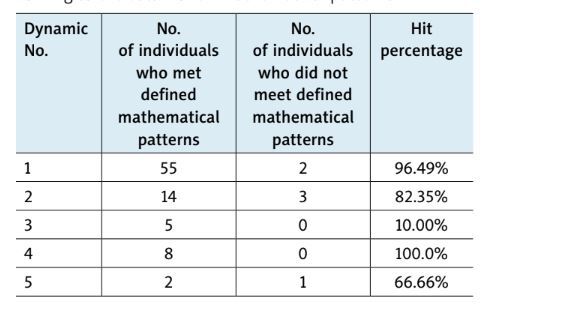
The global success probability of 93.33% was obtained for the evaluation of 5 dynamics. Leukocyte ranging below 4,000/ml3 and 3,000/ml3 were associated with less than 570 CD4+/μl, with the probability of success of 0.923 and 1, respectively.
Conclusions:
The clinical applicability of the methodology developed for the prediction of CD4+ T lymphocyte count in patients with HIV/AIDS was confirmed without using statistical measures, while minimizing costs and resources.
CD4+ T lymphocyte count is a high-cost para-clinical test, essential for follow-up of human immuno-deficiency virus (HIV)/acquired immunodeficiency syndrome (AIDS) patients. For this test, various methodologies have been developed to allow estimating the evolution of this cell line in a more cost-effective way, giving the possibility for large number of patients to better control their immune status. Aim of the study was to confirm the predictive capacity of a methodology based on set theory, probability theory, and mathematical patterns, to predict the evolution of CD4+ T lymphocyte count in patients with HIV/AIDS.
Material and methods:
Mathematical patterns identified in a previous study were applied to predict CD4+ T lymphocyte counts in ranges of clinical interest, in para-clinical follow-ups of 90 HIV-infected patients from previous studies’ databases of the Insight Group.
Results:
The global success probability of 93.33% was obtained for the evaluation of 5 dynamics. Leukocyte ranging below 4,000/ml3 and 3,000/ml3 were associated with less than 570 CD4+/μl, with the probability of success of 0.923 and 1, respectively.
Conclusions:
The clinical applicability of the methodology developed for the prediction of CD4+ T lymphocyte count in patients with HIV/AIDS was confirmed without using statistical measures, while minimizing costs and resources.
REFERENCES (31)
1.
UNAIDS. AIDS epidemic update: December 2021. WHO Library Cataloguing-in-Publication Data. Available at: http://www.unaids.org/en/media....
2.
Sabogal A, ITS Group, Public Health Surveillance and Control Subdirectorate. Report on HIV-AIDS Colombia period XIII year 2019. Surveillance and control subdirectorate in public health. National Institute of Health, Colombia. Weekly epidemiological bulletin, epidemiological week number 49 of 2010 (December 5 to 11, 2020). Hepatitis B. p. 15.
3.
Abbas A, Lichtman A, Pober J. Cellular and Molecular Immunology. 4th Edition. Madrid: McGraw Hill; 2002, p. 478-481.
4.
Zijenah, L, Kadzirange G, Madzime S, Borok M, Mudiwa Ch, Tobaiwa O, et al. Affordable flow cytometry for enumeration of absolute CD4+ T-lymphocytes to identify subtype C HIV-1 infected adults requiring antiretroviral therapy (ART) and monitoring response to ART in a resource-limited setting. J Transl Med 2006; 4: 33. DOI: 10.1186/1479-5876-4-33.
5.
Obirikorang C, Quaye L, Acheampong I. Total lymphocyte count as a surrogate marker for CD4 count in resource-limited settings. BMC Infect Dis 2012; 12: 128. DOI: 10.1186/1471-2334-12-128.
6.
Daka D, Loha E. Relationship between total lymphocyte count (TLC) and CD4 count among peoples living with HIV, Southern Ethiopia: a retrospective evaluation. AIDS Res Ther 2088; 5: 26. DOI: 10.1186/1742-6405-5-26.
7.
Williams BG, Korenromp EL, Gouws E, Schmid GP, Auvert B, Dye C. HIV infection, antiretroviral therapy, and CD4+ cell count distributions in African populations. J Infect Dis 2006; 194: 1450-1458.
8.
Singh Y, Mars M. Support vector machines to forecast changes in CD4 count of HIV-1 positive patients. Sci Res Essays 2010; 5: 2384-2390.
9.
Budiono W. Total lymphocyte count and hemoglobin combined to predict CD4 lymphocyte counts of less than 200 cells/mm(3) in HIV/AIDS. Indonesian Medical Act 2008; 40: 59-62.
10.
Rodríguez J. Fractal behavior of the specific T repertoire against the allergen Poa P9. Journal Faculty of Medicine National University of Colombia 2005; 53: 72-78.
11.
Rodríguez J. HLA class II binding theory combinatorial probability and entropy theories applied to peptide sequences. Immunology 2008; 27: 151-166.
12.
Hrbacek K, Jech T. Introduction to set theory. 3rd ed. New York: Marcel Dekker, Inc.; 1999.
13.
Feynman RP, Leighton RB, Sands M. Probability. In: Feynman RP, Leighton RB, Sands M (eds.). Physics. Vol. 1. Wilmington: Addison-Wesley Iberoamericana, SA; 1964, p. 6-1, 6-16.
14.
Rodríguez J, Prieto S, Bernal P, Pérez C, Correa C. Vitery S. Set theory applied to populations of leukocytes, lymphocytes and CD4 from patients with HIV. Prediction of CD4 T lymphocytes, for clinical application. MED Journal 2011; 19: 148-156.
15.
Rodríguez J, Prieto S, Bernal P, Pérez C, Correa C, Álvarez L, et al. Prediction of CD4 T Lymphocytes based on Probability Theory. Clinical application to populations of leukocytes, lymphocytes and CD4 from patients with HIV. Infectious 2012; 16: 15-22.
16.
Gitura B, Joshi MD, Lule GN, Anzala O. Total lymphocyte count as a surrogate marker for CD4+ T cell count in initiating antiretroviral therapy at Kenyatta National Hospital, Nairobi. East Afr Med J. 2007; 84: 466-472.
17.
Brown E, Otieno P, Mbori-Ngacha D, Farquhar C, Obimbo E, Nduati R, et al. Comparison of CD4 cell count, viral load, and other markers for the prediction of mortality among HIV-1-infected. J Infect Dis 2009; 199: 1292-1300.
18.
Chen RY, Westfall AO, Hardin JM, Miller-Hardwick C, StringerJS, Rapper JL, et al. Complete blood cell count as a surrogate CD4 cell marker for HIV monitoring in resource-limited settings. J Acquir Immune Defic Syndr 2007; 44: 525-530.
19.
Williams BG, Korenromp EL, Gouws E, Dye C. The rate of decline of CD4 T-cells in people infected with HIV. Cornell University. Library. 2009. arXiv:0908.1556v1.http://arxiv.org/abs/0908.1556.
20.
Vélez de Mendizábal N, Torrealdea J. System Dynamics Modeling of the immune response to HIV-1 infection. Initiation to Research. 2006. Available at: http://revistaselectronicas.uj....
21.
Larder B, Wang D, Revell A, Montaner J, Harrigan R, De Wolf F, et al. The development of artificial neural networks to predict virological response to combination HIV therapy. Antiviral Ther 2007; 12: 15-24.
22.
Altman A, Däumer M, Beerenwinkel N, Peres Y, Schülter E, Büch J, et al. Predicting the response to combination antiretroviral therapy: retro-spective validation of geno2pheno-THEO on a large clinical database. J Infect Dis 2009, 199: 999-1006.
23.
Altmann A, Rosen-Zvi M, Prosperi M, Aharoni E, Neuvirth N, Schülter E, et al. Comparison of classifier fusion methods for predicting response to anti HIV-1 therapy. PLoS One 2008; 3: e3470. DOI: 10.1371/journal.pone.0003470.
24.
Wang D, De Gruttola V, Hammer S, Harrigan R, Larder B, Wegner S, et al. A collaborative HIV Resistance Response Database Initiative: Predicting Virological Response Using Neural Network Models. Poster presentation at: The XI International HIV Drug Resistance Workshop, Seville; 2002.
25.
Rodríguez J, Prieto S, Correa C, Posso H, Bernal P, Puerta G, et al. Fractal generalization of preneoplastic and cancer cells of the cervical squamous epithelium. a new methodology of clinical application. Med Magazine 2010; 18: 33-41.
26.
Rodriguez J. Method for predicting the temporal dynamics of malaria in the municipalities of Colombia. Pan Am J Public Health 2010; 27: 211-218.
27.
Rodríguez J. New physical and mathematical diagnosis of fetal monitoring: prediction of clinical application. Moment Magazine of Physics 2012; 44: 49-65.
28.
Rodriguez J. Proportional entropy of cardiac dynamic systems. Physical and mathematical predictions of cardiac dynamics for clinical applica-tion. Rev Colom Cardiol 2010; 17: 115-129.
29.
Rodríguez J, Prieto S, Flórez M, Alarcón C, López R, Aguirre G, et al. Physical-mathematical diagnosis of cardiac dynamics on neonatal sepsis: predictions of clinical application. J Med Med Sci 2014; 5: 102-108.
30.
Rodríguez J, Prieto S, Correa C, Mendoza F, Weisz G, Soracipa M, et al. Physical mathematical evaluation of the cardiac dynamic applying the Zipf-Mandelbrot law. Journal of Modern Physics 2015; 6: 1881-1888.
31.
Rodríguez J. Dynamical systems applied to dynamic variables of patients from the intensive care unit (ICU): physical and mathematical mor-tality predictions on ICU. J Med Med Sci 2015; 6: 209-220.
Share
RELATED ARTICLE
| eISSN: | 1732-2707 |
| ISSN: | 1730-1270 |

We process personal data collected when visiting the website. The function of obtaining information about users and their behavior is carried out by voluntarily entered information in forms and saving cookies in end devices. Data, including cookies, are used to provide services, improve the user experience and to analyze the traffic in accordance with the Privacy policy. Data are also collected and processed by Google Analytics tool (more).
You can change cookies settings in your browser. Restricted use of cookies in the browser configuration may affect some functionalities of the website.
You can change cookies settings in your browser. Restricted use of cookies in the browser configuration may affect some functionalities of the website.