REVIEW PAPER
Effectiveness of nutritional intervention
on immunity of people living with HIV/AIDS: a systematic review
1
GIMS Government College of Nursing, Gadag, India
2
Manipal College of Nursing, MAHE, Manipal, India
3
BVVS Sajjalashree Institute of Nursing Sciences, Bagalkot, India
Submission date: 2022-06-20
Acceptance date: 2022-07-26
Publication date: 2025-08-20
Corresponding author
HIV & AIDS Review 2025;24(3):184-188
KEYWORDS
TOPICS
ABSTRACT
An enormous progress has been made in the modality of treatment in human immunodeficiency virus (HIV) and acquired immunodeficiency syndrome (AIDS) patients. In order to develop cure and enhance immune levels of people living with HIV/AIDS (PLHIV), major researches are being conducted across the globe. Nutritional intervention studies have been also conducted widely over a period of time to improve immune status of people living with HIV/AIDS, but concrete evidences in this regard are still lacking.
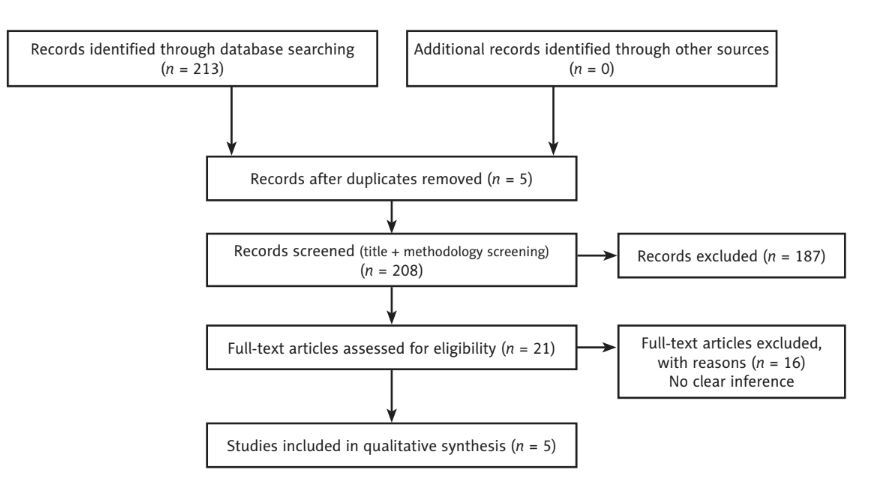
The objective of the study was to assess the effectiveness of selected nutritional interventions (zinc) on immunity of people living with HIV/AIDS. Search methods and selection criteria included randomized controlled trials investigating nutritional interventions, particularly with zinc. The effect of zinc on immune status of PLHIV was assessed. An extensive search from online databases, such as ProQuest, PubMed, Cochrane, and Science Direct was conducted from April 28, 2022 to May 28, 2022. Three reviewers independently screened and selected studies for inclusion. Cumulative sample size was 1,329 studies. After screening with PEDro scale and PRISMA reporting, five papers were considered to derive a consensus on the effect of zinc on immune status of PLHIV. As included studies were diverse in nature, meta-analysis was not possible to perform. Four studies revealed that zinc supplementation was not effective in enhancing immune system of PLHIV, whereas one study showed that zinc supplementation was effective in boosting immune level of PLHIV.
In conclusion, zinc supplementation is beneficial and safe among people living with HIV/AIDS as it boosts immunity, but further investigation is needed to generalize the findings.
REFERENCES (17)
1.
World Health Organization. Why the pandemic is not over. Available at: https://www.who.int/news-room/....
2.
De Pee S, Semba RD. Role of nutrition in HIV infection: review of evidence for more effective programming in resource-limited settings. Food and Nutrition Bulletin 2010; 31 (4 Suppl 4): S313-44.
3.
Maher CG, Sherrington C, Herbert RD, Moseley AM, Elkins M. Reliability of the PEDro scale for rating quality of randomized controlled trials. Phys Ther 2003; 83: 713-721.
4.
Page MJ, McKenzie JE, Bossuyt PM, Boutron I, Hoffmann TC, Mulrow CD, et al. The PRISMA 2020 statement: an updated guideline for reporting systematic reviews. BMJ 2021; 372: n71. DOI: 10.1136/bmj.n71.
5.
Freiberg MS, Cheng DM, Gnatienko N, Blokhina E, Coleman SM, Doyle MF, et al. Effect of zinc supplementation vs placebo on mortality risk and HIV disease progression among HIV-positive adults with heavy alcohol use: a randomized clinical trial. JAMA Network Open 2020; 3: e204330. DOI: 10.1001/jamanetworkopen.2020.4330.
6.
Dirajlal-Fargo S, Yu J, Kulkarni M, Sattar A, Funderburg N, Barkoukis H, Mccomsey GA. Zinc supplementation and inflammation in treated HIV. J Acquir Immune Defic Syndr 2019; 82: 275-280.
7.
Ndeezi G, Tylleskär T, Ndugwa CM, Tumwine JK. Effect of multiple micronutrient supplementation on survival of HIV-infected children in Uganda: a randomized, controlled trial. J Int AIDS Soc 2010; 13: 18. DOI: 10.1186/1758-2652-13-18.
8.
Silva M, Montes CG, Canals A, Mackenna MJ, Wolff M. Role and effects of zinc supplementation in HIV-infected patients with immunovirological discordance: a randomized, double blind, case control study. PLoS One 2021; 16: e0244823. DOI: 10.1371/journal.pone.0244823.
9.
Bobat R, Coovadia H, Stephen C, Naidoo KL, McKerrow N, Black RE, Moss WJ. Safety and efficacy of zinc supplementation for children with HIV-1 infection in South Africa: a randomised double-blind placebo-controlled trial. Lancet 2005; 366: 1862-1867.
10.
Danforth K, Granich R, Wiedeman D, Baxi S, Padian N. Global mortality and morbidity of HIV/AIDS. Major infectious diseases. Washington, DC: The International Bank for Reconstruction and Development/The World Bank; 2017.
11.
Regev D, Cohen-Yatziv L. Effectiveness of art therapy with adult clients in 2018 – what progress has been made? Front Psychol 2018; 9: 1531. DOI: 10.3389/fpsyg.2018.01531.
12.
Garcia-Prats AJ, McMeans AR, Ferry GD, Klish WJ. Nutrition and HIV/AIDS. HIV Curriculum 2010; 286: 4-5.
14.
Shankar AH, Prasad AS. Zinc and immune function: the biological basis of altered resistance to infection. Am J Clin Nutr 1998; 68: 447S-463S.
15.
Diouf A, Badiane A, Manga NM, Idohou-Dossou N, Sow PS, Wade S. Daily consumption of ready-to-use peanut-based therapeutic food increased fat free mass, improved anemic status but has no impact on the zinc status of people living with HIV/AIDS: a randomized controlled trial. BMC Public Health 2016; 16: 1. DOI: 10.1186/s12889-015-2639-8.
16.
Asikin A, Wirjatmadi B, Soeroso J, Astawa E. The effect of zinc sulphate on the increase of CD4 T lymphocytes in HIV/AIDS patients. Biochem Physiol Open Access 2015; DOI: 10.4172/2168-9652.S5-003.
17.
Contreras-Martínez H, Duque-Molina M, Vásquez-Trespalacios EM, Sánchez-Garzón J. Effect of zinc on immune recovery in HIV patients. Medellín 2013. Randomized controlled trial. CES Med 2017; 31. DOI: https://doi.org/10.21615/cesme....
Share
RELATED ARTICLE
| eISSN: | 1732-2707 |
| ISSN: | 1730-1270 |

We process personal data collected when visiting the website. The function of obtaining information about users and their behavior is carried out by voluntarily entered information in forms and saving cookies in end devices. Data, including cookies, are used to provide services, improve the user experience and to analyze the traffic in accordance with the Privacy policy. Data are also collected and processed by Google Analytics tool (more).
You can change cookies settings in your browser. Restricted use of cookies in the browser configuration may affect some functionalities of the website.
You can change cookies settings in your browser. Restricted use of cookies in the browser configuration may affect some functionalities of the website.