REVIEW PAPER
Investigating the status of HIV self-testing before and during the COVID-19 pandemic: a systematic review study
1
Department of Epidemiology and Biostatistics, Infectious Diseases and Tropical Medicine Research Center, Health School, Isfahan University of Medical Sciences, Isfahan, Iran
2
Master’s Student, Epidemiology, Faculty of Health, Esfahan University of Medical Sciences, Esfahan, Iran
These authors had equal contribution to this work
Submission date: 2023-11-26
Final revision date: 2024-04-20
Acceptance date: 2024-04-24
Publication date: 2026-09-25
Corresponding author
Fatemeh Rezaeinade
Epidemiology, Faculty of Health, Esfahan University of Medical Sciences, Esfahan, Iran
Epidemiology, Faculty of Health, Esfahan University of Medical Sciences, Esfahan, Iran
HIV & AIDS Review 2026;25(3):185-192
KEYWORDS
TOPICS
ABSTRACT
In order to effectively address the goals of human immunodeficiency virus (HIV) prevention and control on both regional and global scales, there is a pressing need for an innovative approach to providing testing-related services. The objective of this study was to scrutinize and compare the utilization of HIV self-testing before and during the COVID-19 pandemic.
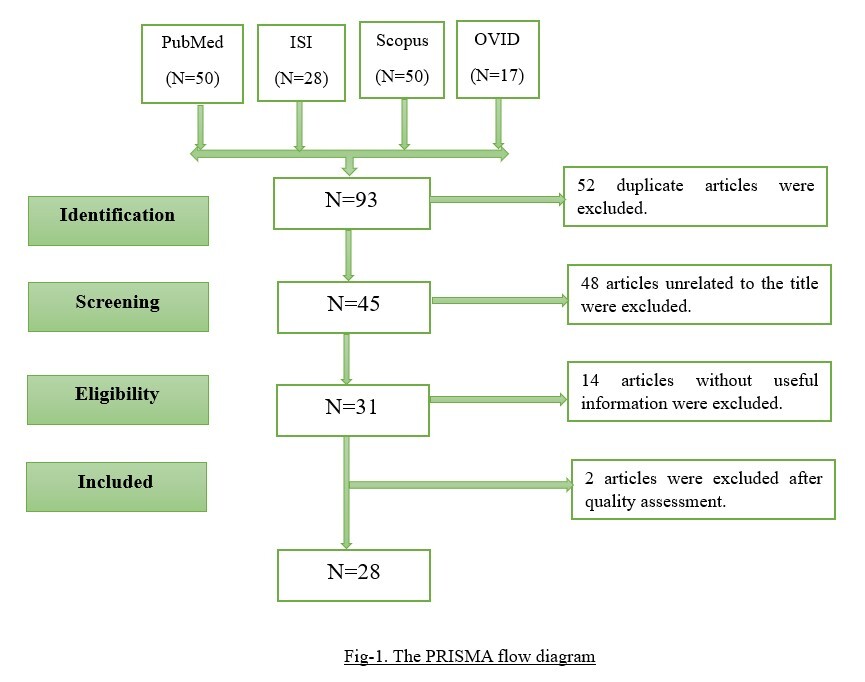
To identify appropriate studies, a comprehensive search was conducted across various databases, including PubMed, Scopus, Ovid, and ISI between December 2019 and May 2023. Strengthening the reporting of observational studies in epidemiology checklist (STROBE) was employed to evaluate the quality of each study. Of the numerous articles reviewed, 24 were included in the study. It was ascertained that before the emergence of the COVID-19 pandemic, individuals living with HIV employed HIV self-testing together with routine HIV tests. The advent of the COVID-19 pandemic disrupted service delivery of healthcare centers, resulting in a decline in facility-based tests. However, the utilization of HIV self-tests significantly surged, proving to be a prevalent method for HIV testing during the COVID-19 pandemic.
It seems that the use of HIV self-testing increased during the COVID-19 pandemic, because it allowed people to test themselves at home, reducing the need to visit clinics, and minimizing the risk of contracting COVID-19. It is recommended that countries with limited access to HIV diagnostic services comprise the usage of HIV self-testing in their national guidelines.
REFERENCES (57)
1.
Moradi G, Ghaderi E, Sargolzaei M, Fallahi H, Eybpoosh S, Tayeri K, et al. HIV/AIDS surveillance system in the Islamic Republic of Iran: history, structures and processes. Iran J Epidemiol 2019; 15: 204-214.
2.
World Health Organization. Data on the size of the HIV/AIDS epidemic. Available from: https://www.who.int/data/gho/d....
3.
Hosek S, Pettifor A. HIV prevention interventions for adolescents. Curr HIV AIDS Rep 2019; 16: 120-128.
4.
World Health Organization. Guidelines on HIV self-testing and partner notification. Supplement to consolidated guidelines on HIV testing services. Available from: https://iris.who.int/items/09b....
5.
Reeves JM, Zigah EY, Shamrock OW, Aidoo-Frimpong G, Dada D, Batten J, et al. Investigating the impact of stigma, accessibility and confidentiality on STI/STD/HIV self-testing among college students in the USA: protocol for a scoping review. BMJ Open 2023; 13: e069574. DOI: 10.1136/bmjopen-2022-069574.
6.
Kra AK, Colin G, Diop PM, Fotso AS, Rouveau N, Hervé KK, et al. Introducing and implementing HIV self-testing in Côte d’Ivoire, Mali, and Senegal: what can we learn from ATLAS project activity reports in the context of the COVID-19 crisis? Front Public Health 2021; 9: 653565. DOI: 10.3389/fpubh.2021.653565.
7.
Ankiersztejn-Bartczak M, Kowalska JD. Self-testing for HIV among partners of newly diagnosed HIV persons – the pilot program of Test and Keep in Care (TAK) project. Przegl Epidemiol 2021; 75: 347-354.
8.
Pant Pai N, Sharma J, Shivkumar S, Pillay S, Vadnais C, Joseph L, et al. Supervised and unsupervised self-testing for HIV in high- and low-risk populations: a systematic review. PLoS Med 2013; 10: e1001414. DOI: 10.1371/journal.pmed.1001414.
9.
Jiang HB, Xie Y, Xiong Y, Zhou Y, Lin K, Yan Y, et al. HIV self-testing partially filled the HIV testing gap among men who have sex with men in China during the COVID-19 pandemic: results from an online survey. J Int AIDS Soc 2021; 24: e25737. DOI: 10.1002/jia2.25737.
10.
Qin Y, Tang W, Nowacki A, Mollan K, Reifeis SA, Hudgens MG, et al. Benefits and potential harms of human immunodeficiency virus self-testing among men who have sex with men in China: an implementation perspective. Sex Transm Dis 2017; 44: 233-238.
11.
Wei C, Yan L, Lippman SA, Su X, Li J, Chen L, et al. Prevalence and correlates of point-of-sex human immunodeficiency virus self-testing among human immunodeficiency virus-negative men who have sex with men in China. Sex Transm Dis 2018; 45: 818-822.
12.
Carnevale C, Richards P, Cohall R, Choe J, Zitaner J, Hall N, et al. At-home testing for sexually transmitted infections during the COVID-19 pandemic. Sex Transm Dis 2021; 48: e11-e14. DOI: 10.1097/OLQ.0000000000001313.
13.
Luo G, Su L, Hu Y, Zhou Y, Sun Y, Feng A, et al. The impact of COVID-19 restrictions on online sales of HIV self-test kits and implications for HIV prevention: analysis of transaction data from a leading e-commerce platform in China. J Acquir Immune Defic Syndr 2022; 90: 408-417.
14.
Shi L, Liu G, Fu G, Zaller N, Wei C, Yang C, et al. Psychosocial and behavioral correlates with HIV testing among men who have sex with men during the COVID‐19 pandemic in China. PloS One 2022; 17: e0262472. DOI: 10.1371/journal.pone.0262472.
15.
O’Byrne P, Musten A, Orser L, Inamdar G, Grayson MO, Jones C, et al. At-home HIV self-testing during COVID: implementing the GetaKit project in Ottawa. Can J Public Health 2021; 112: 587-594.
16.
Galli RA, Lo Hog Tian JM, Sumner-Williams M, McBain K, Stanizai E, Tharao W, et al. An observed, prospective field study to evaluate the performance and acceptance of a blood-based HIV self-test in Canada. BMC Public Health 2021; 21: 1421. DOI: 10.1186/s12889-021-11418-z.
17.
Hoagland B, Torres TS, Bezerra DRB, Benedetti M, Pimenta C, Veloso VG, et al. High acceptability of PrEP teleconsultation and HIV self-testing among PrEP users during the COVID-19 pandemic in Brazil. Braz J Infect Dis 2021; 25: 101037. DOI: 10.1016/j.bjid.2020.11.002.
18.
Rick F, Ishigami BI, Figueiroa FJ, de Castro Cahete LR, Humar RCH, de Jesus R, et al. Impact of COVID-19 on income, prevention attitudes, and access to healthcare among male clients in a Sexually Transmitted Infections clinic. Braz J Infect Dis 2021; 25: 101617. DOI: 10.1016/j.bjid.2021.101617.
19.
Rosadiño JDT, Pagtakhan RG, Briñes MT, Dinglasan JLG, Cruz DP, Corciega JOL, et al. Implementation of unassisted and community-based HIV self-testing (HIVST) during the COVID-19 pandemic among men-who-have-sex-with-men (MSM) and transgender women (TGW): a demonstration study in Metro Manila, Philippines. PLoS One 2023; 18: e0282644. DOI: 10.1371/journal.pone.0282644.
20.
Eustaquio PC, Figuracion R Jr, Izumi K, Morin MJ, Samaco K, Flores SM, et al. Outcomes of a community-led online-based HIV self-testing demonstration among cisgender men who have sex with men and transgender women in the Philippines during the COVID-19 pandemic: a retrospective cohort study. BMC Public Health 2022; 22: 366. DOI: 10.1186/s12889-022-12705-z.
21.
Maheswaran H, Clarke A, MacPherson P, Kumwenda F, Lalloo DG, Corbett EL, et al. Cost-effectiveness of community-based human immunodeficiency virus self-testing in Blantyre, Malawi. Clin Infect Dis 2018; 66: 1211-1221.
22.
Choko AT, MacPherson P, Webb EL, Willey BA, Feasy H, Sambakunsi R, et al. Uptake, accuracy, safety, and linkage into care over two years of promoting annual self-testing for HIV in Blantyre, Malawi: a community-based prospective study. PLoS Med 2015; 12: e1001873. DOI: 10.1371/journal.pmed.1001873.
23.
Ejima K, Koizumi Y, Yamamoto N, Rosenberg M, Ludema C, Bento AI, et al. HIV testing by public health centers and municipalities and new HIV cases during the COVID-19 pandemic in Japan. J Acquir Immune Defic Syndr 2021; 87: e182-e187. DOI: 10.1097/QAI.0000000000002660.
24.
Katz DA, Golden MR, Hughes JP, Farquhar C, Stekler JD. HIV self-testing increases HIV testing frequency in high-risk men who have sex with men: a randomized controlled trial. J Acquir Immune Defic Syndr 2018; 78: 505-512.
25.
Hecht J, Sanchez T, Sullivan PS, DiNenno EA, Cramer N, Delaney KP. Increasing access to HIV testing through direct-to-consumer HIV self-test distribution – United States, March 31, 2020-March 30, 2021. MMWR Morb Mortal Wkly Rep 2021; 70: 1322-1325.
26.
Fistonich GM, Troutman KM, Visconti AJ. A pilot of mail-out HIV and sexually transmitted infection testing in Washington, District of Columbia during the COVID-19 pandemic. Am J Prev Med 2021; 61 (5 Suppl 1): S16-S25. DOI: 10.1016/j.amepre.2021.06.009.
27.
Menza TW, Zlot AI, Garai J, Humphrey S, Ferrer J. The impact of the SARS-CoV-2 pandemic on human immunodeficiency virus and bacterial sexually transmitted infection testing and diagnosis in Oregon. Sex Transm Dis 2021; 48: e59-e63. DOI: 10.1097/OLQ.0000000000001385.
28.
Kalibala S, Tun W, Cherutich P, Nganga A, Oweya E, Oluoch P. Factors associated with acceptability of HIV self-testing among health care workers in Kenya. AIDS Behav 2014; 18 (Suppl 4): S405-S414. DOI: 10.1007/s10461-014-0830-z.
29.
Kariithi E, Sharma M, Kemunto E, Lagat H, Otieno G, Wamuti BM, et al. Using assisted partner services for HIV testing and the treatment of males and their female sexual partners: protocol for an implementation science study. JMIR Res Protoc 2021; 10: e27262. DOI: 10.2196/27262.
30.
Maatouk I, El Nakib M, Assi M, Farah P, Makso B, El Nakib C, et al. Community-led HIV self-testing for men who have sex with men in Lebanon: lessons learned and impact of COVID-19. Health Res Policy Syst 2021; 19 (Suppl 1): 50. DOI: 10.1186/s12961-021-00709-x.
31.
Ortblad KF, Musoke DK, Ngabirano T, Nakitende A, Taasi G, Barresi LG, et al. HIV self-test performance among female sex workers in Kampala, Uganda: a cross-sectional study. BMJ Open 2018; 8: e022652. DOI: 10.1136/bmjopen-2018-022652.
32.
Muwanguzi PA, Kutyabami P, Osingada CP, Nasuuna EM, Kitutu FE, Ngabirano TD, et al. Conducting an ongoing HIV clinical trial during the COVID-19 pandemic in Uganda: a qualitative study of research team and participants’ experiences and lessons learnt. BMJ Open 2021; 11: e048825. DOI: 10.1136/bmjopen-2021-048825.
33.
Kinney S, Lea CS, Kearney G, Kinsey A, Amaya C. Predictors for using a HIV self-test among migrant and seasonal farmworkers in North Carolina. Int J Environ Res Public Health 2015; 12: 8348-8358.
34.
Nyunt OH, Wan NMA, Soan P, Tawil O, Lwin MK, Hsan MTA, et al. How Myanmar is working to maintain essential services for people living with HIV and key populations during the COVID-19 pandemic. J Int Assoc Provid AIDS Care 2021; 20: 23259582211017742. DOI: 10.1177/23259582211017742.
35.
Corbett E. Health Worker Access to HIV/TB Prevention, Treatment and Care Services in Africa: Situational Analysis and Mapping of Routine and Current Best Practices. London School of Hygiene and Tropical Medicine; WHO/HIV Department, WHO/TB Department, Global Health Workforce Alliance; 2007.
36.
National AIDS and STD Control Programme. Preparedness for HIV/AIDS service delivery: the 2005 Kenya health worker survey. Ministry of Health Kenya; 2006.
37.
Brown W, Carballo-Diéguez A, John RM, Schnall R. Information, motivation, and behavioral skills of high-risk young adults to use the HIV self-test. AIDS Behav 2016; 20: 2000-2009.
38.
Shanks L, Klarkowski D, O’Brien DP. False positive HIV diagnoses in resource limited settings: operational lessons learned for HIV programmes. PLoS One 2013; 8: e59906. DOI: 10.1371/journal.pone.0059906.
39.
Jafa K, Patel P, Mackellar DA, Sullivan PS, Delaney KP, Sides TL, et al. Investigation of false positive results with an oral fluid rapid HIV-1/2 antibody test. PLoS One 2007; 2: e185. DOI: 10.1371/journal.pone.0000185.
40.
Napierala Mavedzenge S, Baggaley R, Corbett EL. A review of self-testing for HIV: research and policy priorities in a new era of HIV prevention. Clin Infect Dis 2013; 57: 126-138.
41.
Witzel T, Weatherburn P, Burns AF, Rodger A, Rhodes T. What Role does HIV Self-Testing (HIV-ST) Have for Men who Have Sex with Men (MSM) in the UK? Testing Needs, Social Norms and Biological Citizenship. In: 21st International AIDS Conference (AIDS 2016). Durban, South Africa, 18-22 July 2016.
42.
Sarkar A, Mburu G, Shivkumar PV, Sharma P, Campbell F, Behera J, et al. Feasibility of supervised self-testing using an oral fluid-based HIV rapid testing method: a cross-sectional, mixed method study among pregnant women in rural India. J Int AIDS Soc 2016; 19: 20993. DOI: 10.7448/IAS.19.1.20993.
43.
Kumwenda M, Munthali A, Phiri M, Mwale D, Gutteberg T, MacPherson E, et al. Factors shaping initial decision-making to self-test amongst cohabiting couples in urban Blantyre, Malawi. AIDS Behav 2014; 18 (Suppl 4): 396-404.
44.
World Health Organization. Consolidated guidelines on HIV testing services: 5Cs: consent, confidentiality, counselling, correct results and connection 2015. Geneva: WHO 2015. Available from: https://iris.who.int/items/763....
45.
World Health Organization. Consolidated guidelines on the use of antiretroviral drugs for treating and preventing HIV infection: recommendations for a public health approach. Geneva: WHO; 2016. Available from: https://www.who.int/publicatio....
46.
World Health Organization. Towards universal access by 2010: how WHO is working with countries to scale-up HIV prevention, treatment, care and support. Geneva: WHO; 2006.
47.
Joint United Nations Programme on HIV and AIDS. Prevention gap report. Geneva: UNAIDS; 2016.
48.
Hosseini Hooshyar S, Shahesmaeili A, Safari Faramani R, Khajehkazemi R, Nasirian M, Sharifi H, et al. 85: Knowledge, attitude and practice of HIV/AIDS: a systematic review among key populations at risk for HIV infection in Iran. BMJ Open 2017; 7 (Suppl 1): bmjopen-2016-015415.85. DOI: https://doi.org/10.1136/bmjope....
49.
Joint United Nations Programme on HIV and AIDS. A short technical update on self testing for HIV. UNAIDS; 2014. Available from: https://www.unaids.org/en/reso....
50.
Pai NP, Sharma J, Shivkumar S, Pillay S, Vadnais C, Joseph L, et al. Supervised and unsupervised self-testing for HIV in high-and low-risk populations: a systematic review. PLoS Med 2013; 10: e1001414. DOI: https://doi.org/10.1371/journa....
51.
d’Elbée M, Traore MM, Badiane K, Vautier A, Fotso AS, Kabemba OK, et al. Costs and scale-up costs of integrating HIV self-testing into civil society organisation-led programmes for key populations in Côte d'Ivoire, Senegal, and Mali. Front Public Health 2021; 9: 653612. DOI: 10.3389/fpubh.2021.653612.
52.
Unitaid. HIV self-testing technology landscape – 2nd edition. WHO; 2016. Available from: https://www.aidsdatahub.org/re....
53.
Katz D, Golden MR, Hughes J, Farquhar C, Stekler J. HIV self-testing increases HIV testing frequency among high-risk men who have sex with men: a randomized controlled trial. In: 8th International AIDS Society Conference. Vancouver, Canada, 19-22 July 2015.
54.
Jamil M, Prestage G, Fairley C, Grulich A, Smith K, Chen M, et al. Access to HIV self-testing doubles the frequency of HIV testing among gay and bisexual men at higher risk of infection: a randomised controlled trial. In: 21st International AIDS Conference. Durban, South Africa, 18-22 July 2016.
55.
Thirumurthy H, Masters SH, Napierala Mavedzenge S, Maman S, Omanga E, Agot K. Promoting male partner HIV testing and safer sexual decision making through secondary distribution of self-tests by HIV-negative female sex workers and women receiving antenatal and post-partum care in Kenya: a cohort study. Lancet HIV 2016; 3: e266-e274. DOI: 10.1016/S2352-3018(16)00041-2.
56.
Gichangi A, Wambua J, Gohole A, Mutwiwa S, Njogu R, Bazant E, et al. Provision of oral HIV self-test kits triples uptake of HIV testing among male partners of antenatal care clients: results of a randomized trial in Kenya. In: 21st International AIDS Conference. Durban, South Africa, 18-22 July 2016.
57.
Unitaid. Market and technology landscape: HIV rapid diagnostic tests for self-testing. Geneva: WHO; 2018.
Share
RELATED ARTICLE
| eISSN: | 1732-2707 |
| ISSN: | 1730-1270 |

We process personal data collected when visiting the website. The function of obtaining information about users and their behavior is carried out by voluntarily entered information in forms and saving cookies in end devices. Data, including cookies, are used to provide services, improve the user experience and to analyze the traffic in accordance with the Privacy policy. Data are also collected and processed by Google Analytics tool (more).
You can change cookies settings in your browser. Restricted use of cookies in the browser configuration may affect some functionalities of the website.
You can change cookies settings in your browser. Restricted use of cookies in the browser configuration may affect some functionalities of the website.